
Before you put a single dollar on the felt, a stop loss is just a pre-agreed exit point that keeps a bad run from turning into a bad week. Australian players who treat it like a loose suggestion usually regret it by the third arvo. The real work happens earlier – during signup, verification, and that first deposit – so the limit is actually enforceable when the cards start turning. We walked through how a player encounters casino strategies stop loss from registration through the first session, and where it holds up versus where it quietly slips.
Setting the limit before you sign up
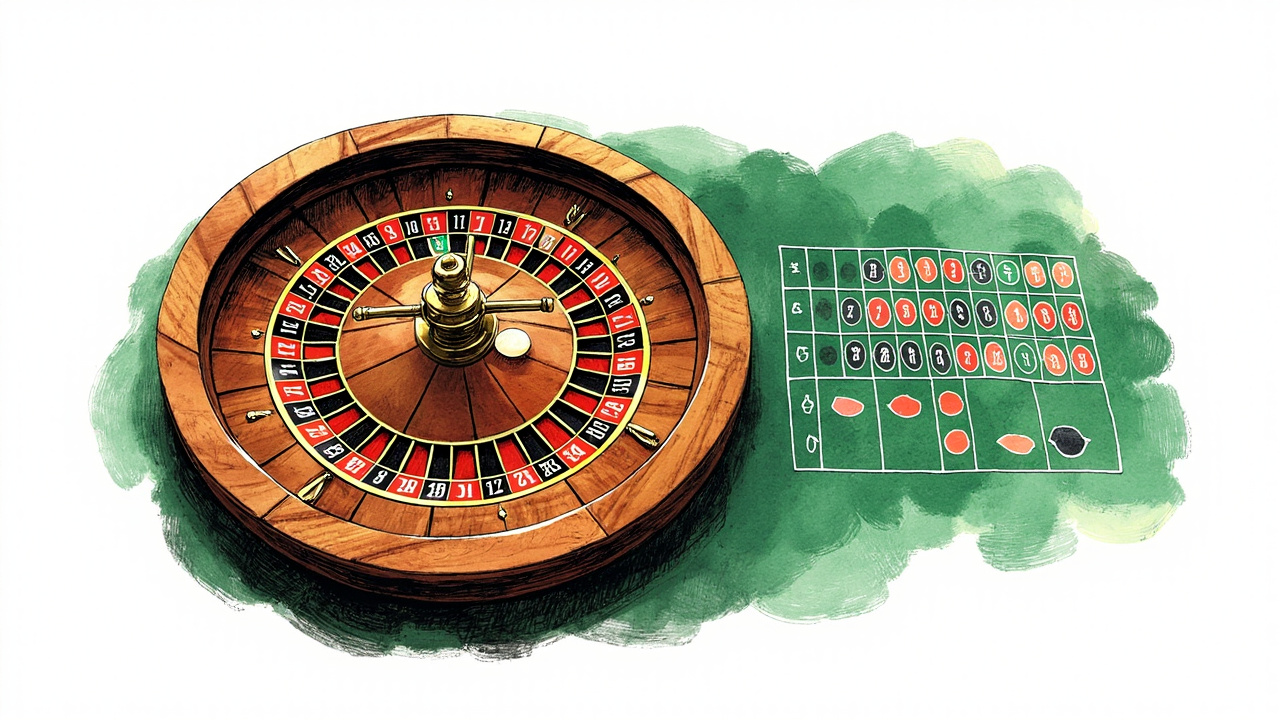
You do not set a stop loss after the first spin; you set it before you even touch the registration form. That means deciding your session ceiling in plain numbers, not in vibes. Most operators we looked at let you cap deposits and losses at the account level, but the wording varies enough that a rushed signup can leave the feature switched off by default. Eligibility in Australia is straightforward on paper – you must be 18 or older – but verification is where the real friction sits. You will usually need to upload ID, proof of address, and sometimes a payment method match before any withdrawal clears, which is exactly why a stop loss only works if your account is fully verified before you start playing seriously.
The first deposit and bonus activation deserve their own pause. A welcome bonus can look generous until you read the wagering requirement and realise your stop loss might get eaten by rollover maths before you ever hit the exit point. We prefer operators that let you activate a bonus separately from your real-money balance, because mixing the two turns a clean exit rule into a blurred mess. If you are playing on mobile, the same rules apply – the screen is smaller, but the limits should sit in the same account section, not buried under some tucked-away settings menu. Support should be able to confirm your loss cap in writing before you fund the account, not after you have already had three bad spins.
| Step | What to check | Why it matters for a stop loss |
|---|---|---|
| Signup and eligibility | Age confirmation, account details | Sets the baseline before any limit can stick |
| Verification | ID, address, payment match | Unverified accounts can delay or block loss-cap enforcement |
| First deposit | Funding method, currency, minimums | Determines whether your cap is measured in the right denomination |
| Bonus activation | Wagering, game weighting, expiry | A bonus can distort your real loss run if it sits on the same balance |
| First play | Session timer, visible balance, limit visibility | You need to see the cap while you play, not after |
How a stop loss actually works in a live session
A stop loss is not a magic shield; it is a number you agree with yourself before the first hand and a rule you enforce when the run turns. The tricky part is that casino games do not pause for your mood. Slots can run cold for a stretch that feels personal, table games can swing on a single bad decision, and ETGs can layer bonus rounds on top of ordinary variance. That is why the limit has to be set in the account or session controls before you start, not scribbled on a napkin and hoped for. When the balance hits your ceiling, you walk. Not “one more spin to recover,” not “I’ll stop after this round.” The whole point is that the decision is made cold, before the heat arrives.
I have seen producers build loss-cap prompts directly into the game loop, and I have seen operators hide them three menus deep. The difference matters. A visible, account-level stop loss that flashes when you approach it is doing its job; a buried toggle that you forget to switch on is just cosmetic. In my own work across slots and ETGs, I have always argued that the limit should sit at the same level as the deposit cap, because players who treat them as separate things usually end up funding past their own ceiling. The maths behind any game is transparent about variance, but it is not transparent about your bankroll, which is why the stop loss has to be a human rule, not a game feature.
There is a useful comparison in how modern casino dice are transparent to reveal internal tampering – you can see the weight and balance because the design forces honesty. A stop loss works the same way when it is visible and enforced at the account level, because you are not relying on memory or mood when the session turns. When the limit is hidden or optional, you are effectively asking yourself to police your own behaviour while already tilted, which is a poor trade. The players who keep their sessions clean are the ones who treat the cap like a door they locked before they walked in.
For players who want a more structured read on how a stop-loss fits alongside profit targets, a related breakdown on roulette betting strategy with stop-loss and profit targets lays out the same discipline in a table-game context. The principle carries across games: decide the exit before the entry, and let the limit do the arguing for you.
Who this actually suits
A stop loss is not for everyone, and pretending otherwise just creates false confidence. It suits players who play in defined sessions, who know their bankroll is separate from their day-to-day money, and who are willing to walk away when the number is hit. It is less useful for someone who treats every session as open-ended, or who keeps topping up the balance because “the run has to turn.” Those players usually need a deposit cap and a time limit before they need a stop loss, because the loss ceiling is only as good as the discipline around it.
If you are playing for a fixed arvo and you have a clear exit number, the stop loss is a sensible guardrail. If you are chasing a bonus rollover across multiple sittings, the same cap can get messy, because your real loss run is spread across days and funding events. In that case, the better call is to separate bonus play from real-money play and set the loss limit on the real-money side only. The feature is strongest when it is simple, visible, and tied to a single session or a single account balance, not when it is stretched across a week of ad-hoc play.
I have always judged these features by whether they survive contact with a tired player at 11pm, because that is when the rule gets tested. A stop loss that only works when you are fresh is not really a stop loss. The players who benefit most are the ones who set the number once, leave it alone, and let the system enforce what they already decided.
Adam Scott, Independent iGaming Expert, Daintree Digital Ventures, puts it plainly: “A stop loss only earns its keep when it is set before the first bet and visible during the session, otherwise it is just a number players hope they remember.” Lucas Carter, Chief Financial Officer, Daintree Digital Ventures, adds a sharper caveat: “The feature is useful, but it does not change the underlying variance, so players should treat it as a bankroll boundary rather than a way to tilt the odds.” Both points land because they describe the same thing from different angles – the limit is a boundary, not a strategy that beats the game.

The infamous “SP bookie” took illegal off-course bets across mid-century Australia by operating outside any enforceable rule, which is the opposite of what a stop loss is meant to do. A proper loss cap is the enforceable bit: it is the rule you set while calm and the line you do not cross when the session heats up. Singapore’s casino entry levy for locals renews on a daily or annual basis, which is a reminder that real boundaries are usually recurring and explicit, not one-off and vague. That same logic applies here – a stop loss works when it is clear, repeated, and actually enforced at the account level. https://clubhouse-cas1no.com
Adam Hall, Risk and Integrity Manager, Laneway Interactive Media, captures the practical side well: “From a risk perspective, the value of a stop loss is that it removes the need for in-the-moment judgement, which is exactly when judgement tends to fail.” That is the short version of why the feature belongs in the setup, not in the heat of the session. If you are the kind of player who can set a number and respect it, casino strategies stop loss is a solid guardrail. If you are the kind of player who keeps finding reasons to stretch the session, you will need tighter deposit and time limits first, because the stop loss only does its job when the rest of the setup is already honest. Roulette betting strategy with stop-loss and